Learn / Research & science

The science
behind the bounce.

A clear look at rebounding research, what it suggests, and how it fits into everyday movement.

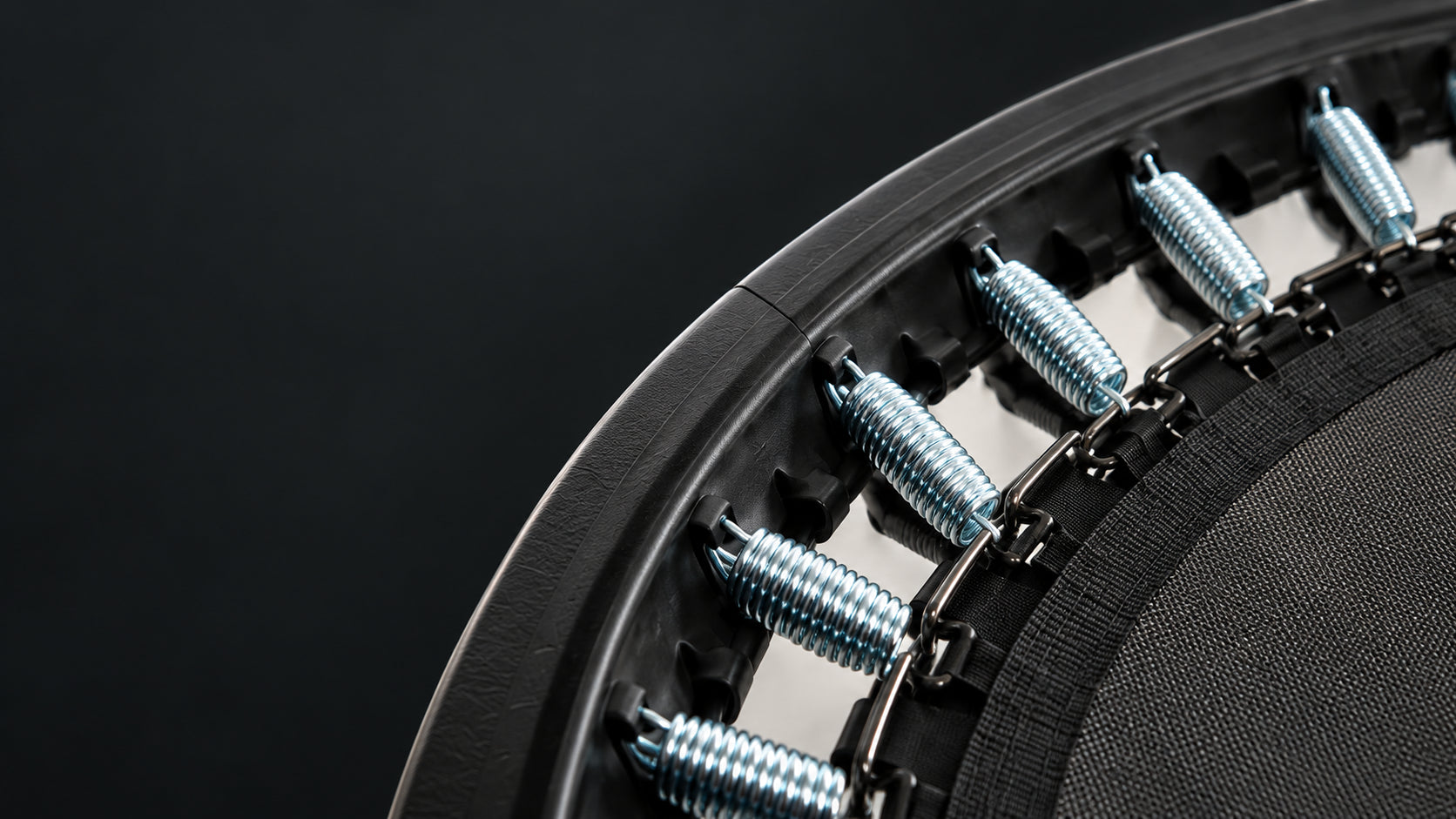
Close-up of the rebounder frame, springs, and woven mat
A closer look at the bounce.

Evidence at a glance

Small studies.
Useful insights.

These studies examined specific people and exercise programs. They do not guarantee individual results or establish benefits specific to ReboundAir equipment.

01 / Aerobic exercise

Movement that can challenge your fitness.

A 2018 proof-of-concept study explored mini-trampoline exercise intensity and its potential to reach recommended training intensities.

The takeaway: movement and pace matter. A gentle bounce and an energetic workout are different activities.

Read the study ↗

02 / Balance & mobility

Promising results from a tailored program.

In a 12-week trial of 40 older women with osteopenia, a combined balance, strength, and jumping program improved balance, mobility, and strength.

The takeaway: benefits came from a structured program. The study did not find a statistically significant between-group effect on bone density.

Read the study ↗

03 / Fitness & body composition

Early findings worth exploring.

A small 12-week study in 18 women reported improvements in fitness and body composition after mini-trampoline training.

The takeaway: there was no comparison group. Larger controlled studies are needed; specific weight-loss results cannot be promised.

Read the study ↗

A landmark study / 1980

What did
NASA study?

Researchers compared treadmill walking and running with trampoline jumping in eight young men. They measured body acceleration, heart rate, and oxygen consumption.

Explore NASA’s research record ↗
8participants2exercise modes1980published

What they found

At comparable heart rate and oxygen consumption, jumping produced greater biomechanical stimuli, with acceleration distributed more evenly across the measured body locations.

What that means here

This was a study of exercise mechanics—not a ReboundAir product test or a weight-loss trial. It does not establish that our rebounders burn 68% more calories, and it is not a NASA endorsement.

Choose movement that fits

Rebounder or treadmill?

Two ways to move indoors. The right fit depends on your space, preferences, and the activity you want to do.

Swipe across to compare both options →

Practical differences between rebounders and treadmills
ConsiderReboundAir rebounderTreadmill
MovementBouncing, stepping, and varied movements on a spring-supported mat.Walking or running on a moving belt.
PaceYou set the rhythm through your own movement.Motorized models let you set belt speed; incline options vary.
Space & storage40-inch frame diameter. Classic folds in half; Ultimate folds into quarters. Allow clear space around and above you.Footprint, overhead clearance, and folding options depend on the model.
PowerNo electricity needed to use the rebounder.Motorized models need power; manual models do not.
A good match if…You enjoy rhythmic movement and want folding equipment.You prefer walking or running with adjustable machine settings.

Calorie use depends on the person, intensity, and duration. Neither option is risk-free or automatically suitable for every body. Follow the equipment instructions and seek individual guidance when needed.

Keep it in perspective

Good questions.
Clear answers.

Does rebounding “exercise every cell” or detox the body?

Those phrases go beyond what the studies above demonstrate. We focus on measurable outcomes such as exercise intensity, balance, and mobility rather than promises about cellular strengthening or detoxification.

Can rebounding replace all other exercise?

Think of it as one activity in a varied routine. What you need depends on your goals and abilities. Our benefits guide explains how it can fit into everyday movement.

Is it suitable if I have osteoporosis or balance difficulties?

A tailored research program is not the same as exercising independently at home. Ask your clinician or physical therapist whether rebounding is appropriate for you, especially with osteoporosis, a fracture history, or balance difficulties.

From reading to routine

Find your
starting point.

Get familiar with the equipment and its setup.

Getting started →